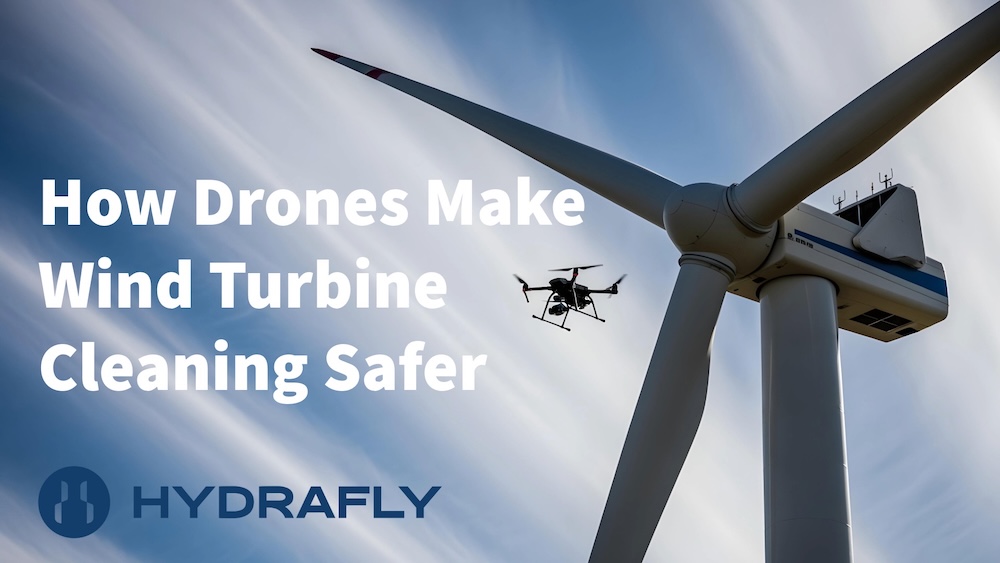
Wind turbines operate in challenging environments, with constant exposure to weather, airborne debris and environmental contaminants. Over time, dirt, insect residue and biological growth such as algae can accumulate on turbine blades and towers, making regular cleaning an important part of effective asset maintenance.
For wind farm operators and maintenance contractors, keeping turbines clean can present logistical and operational challenges. However, advances in drone technology are providing a more efficient alternative to traditional high-access cleaning methods.
Why is Regular Wind Turbine Cleaning Important?
Wind turbine blades are designed with specific aerodynamic profiles to maximise energy generation. The accumulation of insects, dirt and other environmental deposits can affect the condition of blade surfaces and airflow, potentially influencing aerodynamic efficiency.
Turbine towers also require attention. In damp, coastal and agricultural environments, algae and other biological growth can develop on external surfaces. Besides affecting the appearance of the structure, trapped moisture against painted steel surfaces can contribute to localised corrosion over time.
Regular wind turbine cleaning helps maintain surface condition, supports ongoing maintenance programmes and allows potential issues to be identified more easily during inspections.
The Challenges of Traditional Wind Turbine Cleaning
Cleaning structures that can reach significant heights requires careful planning, specialist equipment and appropriate safety measures.
Traditional approaches may involve rope access technicians, scaffolding, cranes or elevated platforms. These methods can increase mobilisation requirements, involve more personnel and extend the time needed to complete cleaning operations.
For wind farm operators managing multiple assets, this can also mean additional downtime, higher operational costs and greater coordination between maintenance teams.
Finding a solution that reduces these challenges without compromising safety is therefore an important consideration for the renewable energy sector.
How Drone Technology Is Changing Wind Turbine Maintenance
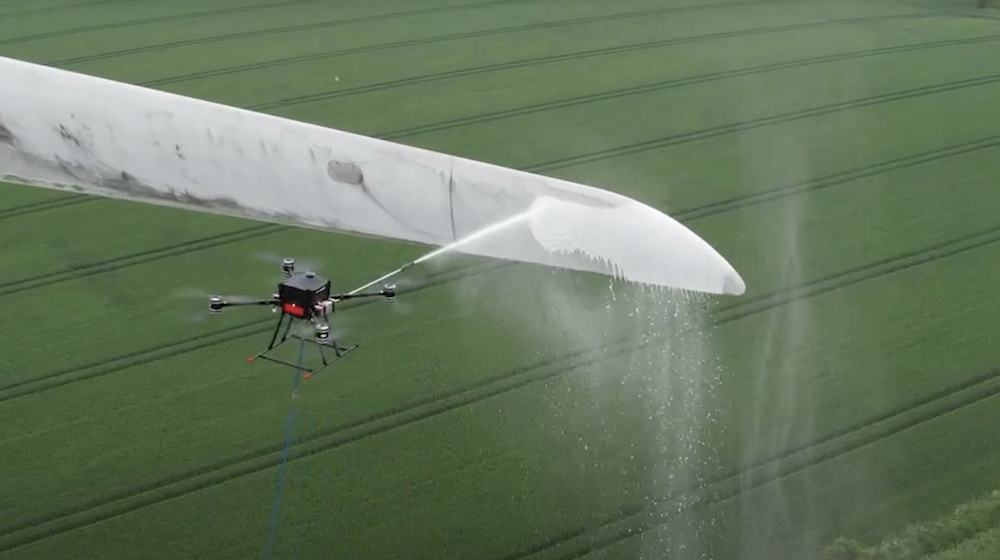
Drone-assisted cleaning offers an alternative approach, allowing operators to access turbine blades and towers without requiring personnel to work at height during the cleaning process.
Using specialist heavy-lift drone systems, cleaning can be carried out from ground level, reducing the need for scaffolding, cranes and rope access equipment.
At Hydrafly, we use a Drone Volt Hercules 20 heavy-lift tethered UAV, capable of operating up to 100 metres above ground level under our CAA-authorised Operating Safety Case.
Our system provides high-pressure hot water cleaning at up to 3,500 PSI, helping remove algae, insect residue, dirt and other environmental deposits from turbine surfaces.
The operational benefits include:
- Improved safety: Reduces the need for personnel to access elevated turbine surfaces during cleaning operations.
- Faster completion: Typically, 1–2 wind turbines can be cleaned per day, depending on height, surface condition and weather.
- Reduced equipment requirements: Eliminates the need for scaffolding, cranes and complex access arrangements for the cleaning process.
- Smaller operational teams: Our self-contained system requires just two operatives, simplifying mobilisation and site coordination.
- Less disruption: Cleaning can be scheduled around existing maintenance programmes and carried out with minimal operational intervention.
Supporting Wind Farm Operators
As the renewable energy sector continues to expand, efficient asset maintenance is essential to keeping infrastructure in good condition.
Hydrafly provides specialist drone wind turbine cleaning for onshore renewable energy assets across the north of the UK, offering a safer, more flexible approach to maintaining turbine blades and towers.
By reducing the need for traditional high-access equipment, minimising personnel requirements and shortening cleaning schedules, drone technology offers wind farm operators and maintenance contractors a practical solution for managing their assets.
Looking for a more efficient way to maintain your wind turbines? Contact Hydrafly to discuss your site requirements and discover how our specialist drone cleaning services can support your maintenance programme.
Source:
University of Illinois – Effects of Leading Edge Erosion on Wind Turbine Blade Performance